
A house shaped by time.
Via Mazzini 35 · Martina Franca
Carucci,
then Fighera.
- Origin of the palazzo
- 18th c.
- The two families
- Carucci-Fighera
- The address
- Via Mazzini 35
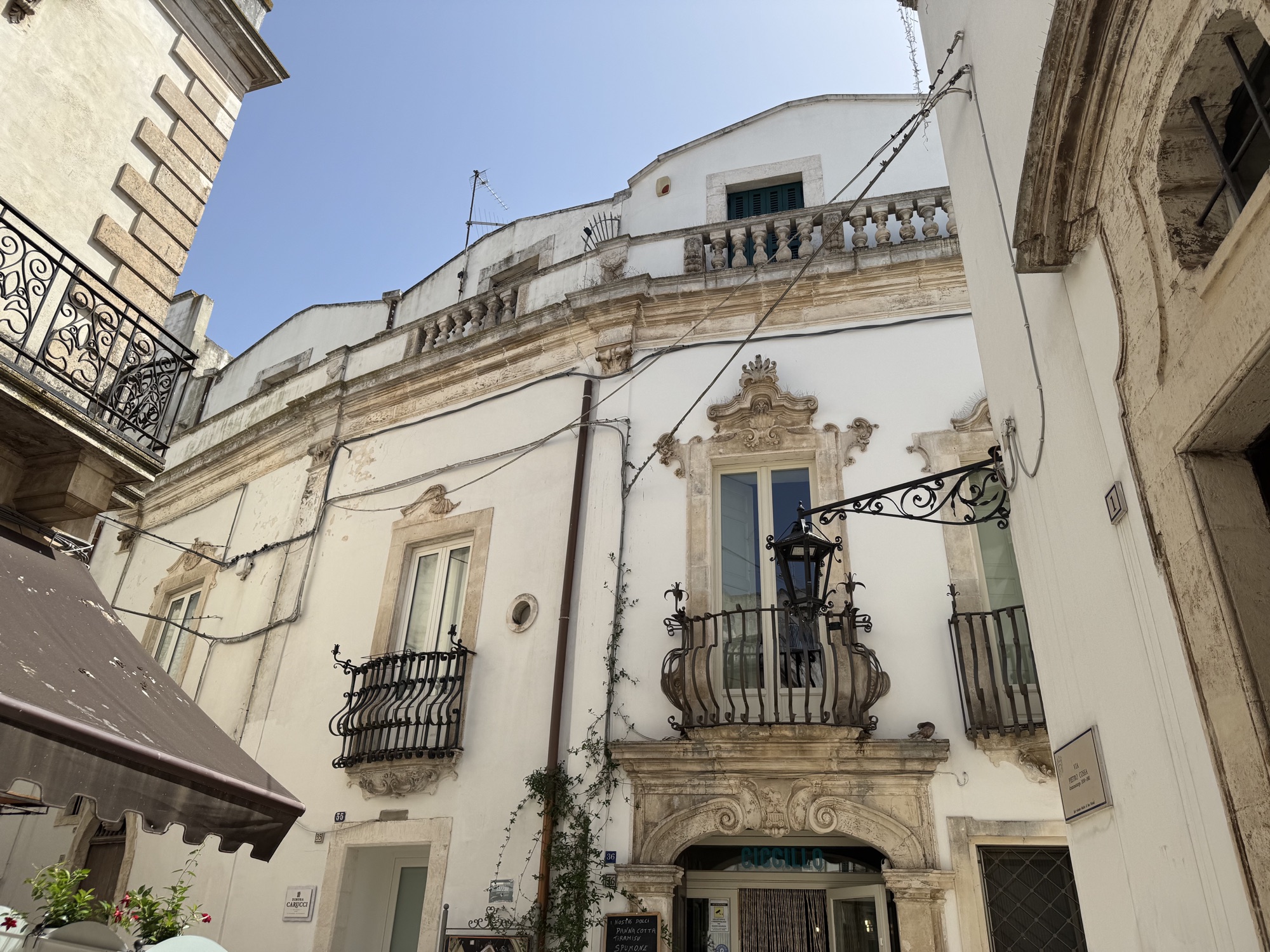
Palazzo Carucci dates from the eighteenth century and was built for the Carucci family, along the street that today carries the name of Giuseppe Mazzini. By 1777, the year of the gallery’s temperas, the building already stood. Later ownership brought the Fighera name with it: hence the double denomination, Palazzo Carucci-Fighera, still used today.
Via Mazzini is one of the historic axes of Martina Franca’s old town. Not a straight line, but a curve that follows the ancient outline of the town: the palazzi stand along that curve, and the façades reveal themselves one at a time, never all at once.
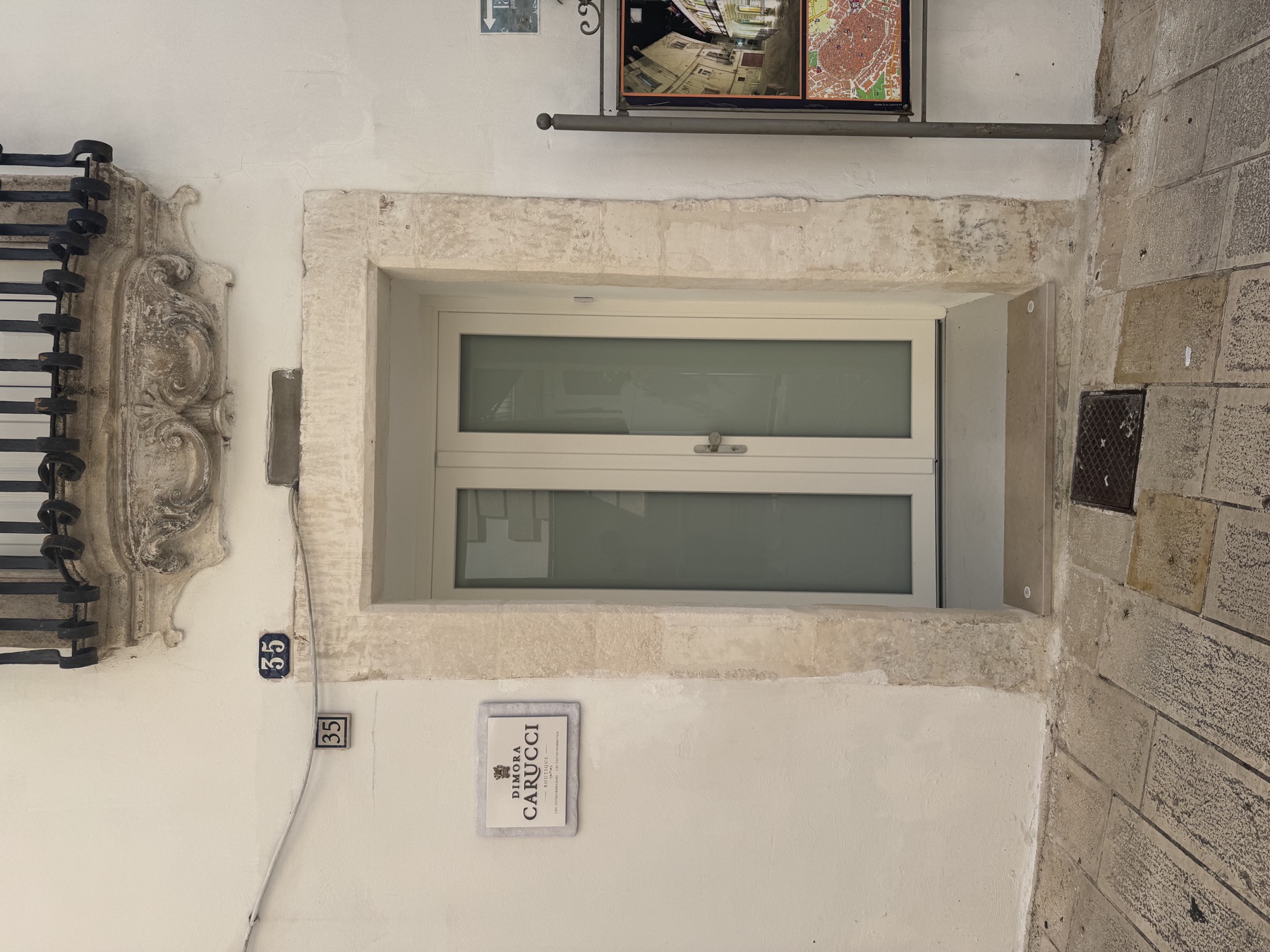
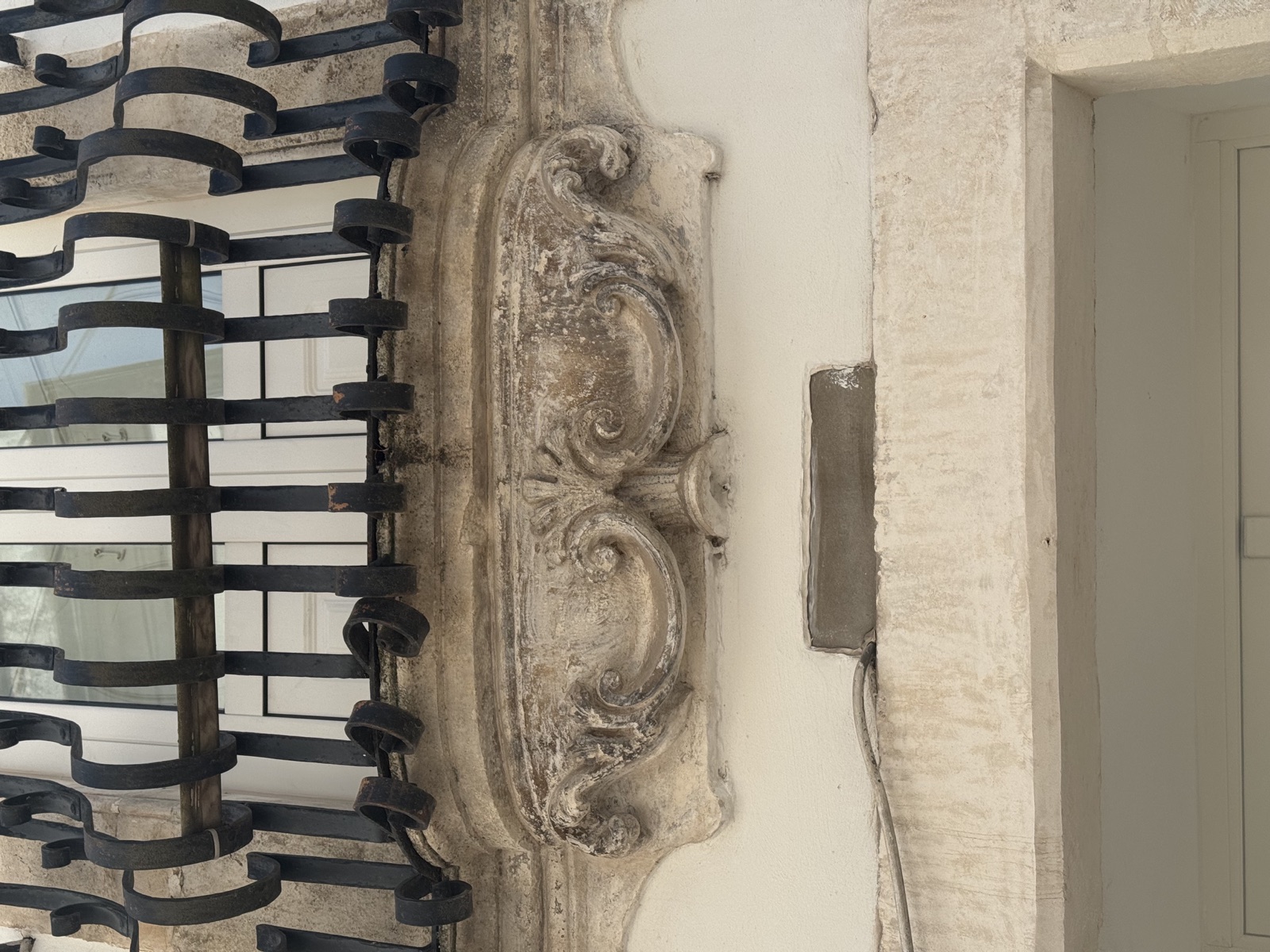
The palazzo unfolds in two wings that follow the curve of the street. Walking slowly, you notice the stone portals, the Carucci crest with its chariot and zoomorphic figure, the baroque corbels beneath the balconies and an apotropaic mask set to guard the threshold. The entrance to Dimora Carucci is at number 35.
The portal, the balcony,
number 35.
The façade holds the whole eighteenth-century repertoire: the moving cornice of the portal, the carved stone corbels, the wrought iron of the balconies swelling like a sail. All handwork, never twice the same.
The entrance to the house is discreet: a narrow door at number 35, a stone plaque, and then the house opening inwards.
Alessandro Fighera
and the modern town.
Among the figures connected to the palazzo, Alessandro Fighera left the most visible mark on the town. A physician and administrator, he served as mayor of Martina Franca from 1870 to 1876 and was a central personality of nineteenth-century Martina.
His time in office is linked to the works that gave the town its modern face: the municipal gardens, today Villa Garibaldi, the opening of Piazza XX Settembre, and a series of public works and services designed for a growing town.
Temperas from 1777
in the palazzo gallery.
The gallery of the palazzo holds a cycle of tempera paintings attributed to Domenico Antonio Carella and dated 1777: by then the palazzo was already built. They are mythological scenes, made to be crossed by the eye.
The temperas belong to the historic rooms of the palazzo: they are not part of the house, and a stay does not include a visit.
- 01The Death of Cleopatra
- 02The Judgement of Paris
- 03The Triumph of Bacchus and Ariadne
- 04The Triumph of Cybele
- 05Diana and Endymion
The story continues,
by staying here.
More than two centuries of stone, of hands and of restoration lead here: to a house you can live in, for a few days, slowly.